
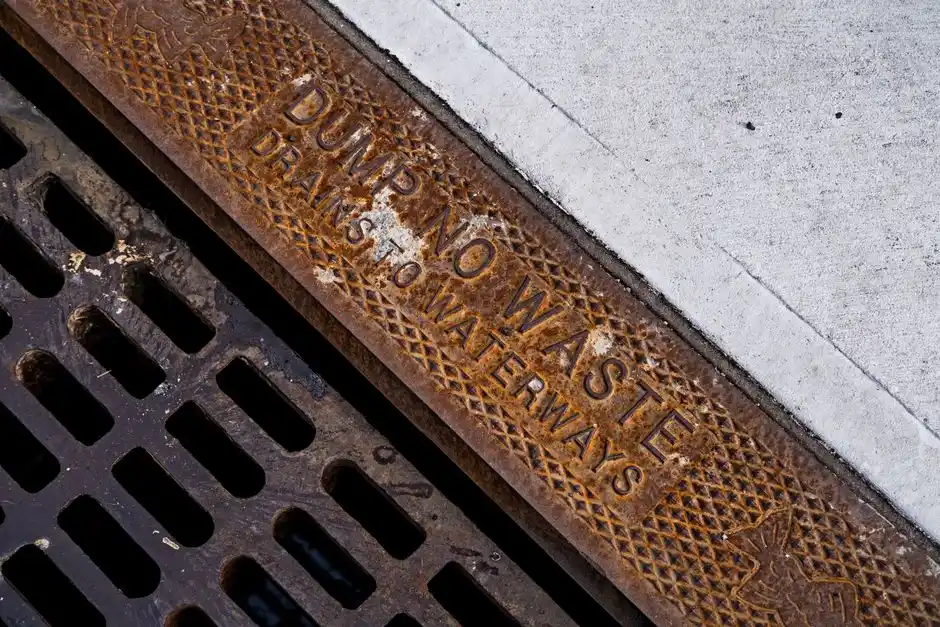
Yard runoff usually needs to stay on your property when no approved outlet exists or when directing it away would send concentrated water onto a neighbor's land, a sidewalk, or a street. California does not impose one statewide rule requiring every homeowner to retain every drop; city and county codes, grading approvals, stormwater permits, and nuisance laws determine what applies to your lot.
California yard drainage runoff rules are a mix of state stormwater requirements and local property standards, so the right answer depends on the discharge point and the way water moves across your site. This guide explains how to check local requirements, plan on-lot drainage, and spot situations that need professional help in , California.
California yard drainage runoff rules is a set of state and local requirements that guides how property owners collect, manage, and discharge rainwater to prevent pollution, flooding, and damage beyond their lot.
When does yard runoff need to stay on-site in California?
Yard runoff needs to stay on-site in California when your local code, approved grading plan, or project stormwater conditions require retention or infiltration, or when no lawful, safe outlet is available. In practice, that means keeping water on your lot until it can soak into suitable soil, evaporate, or reach a drainage connection approved for that use.
A homeowner replacing a few shrubs is not automatically subject to the same stormwater design rules as a major subdivision. But grading changes, new hardscape, retaining walls, and substantial landscape projects can trigger plan review or permit requirements. Check before you pave a large yard or install a pipe that carries water off-site.
Local requirements often focus on outcomes: water should not undermine a foundation, cross a property line in a harmful concentration, block a public path, or carry pollutants into a storm drain. A legal outlet on one property does not establish an automatic right to use the same route on another.
Our team sees how those questions intersect with practical drainage work. If water pools after winter storms or flows toward the house, Yard Drainage Repair in California can start with identifying the flow path and the likely source rather than digging a trench first.
What California rules apply to residential drainage?
California residential drainage requirements come from several layers: state water-quality rules, municipal stormwater programs, building and grading codes, and site-specific permits or recorded conditions. Your city or county public works and building departments are the first places to confirm which rules apply to your address.
Under the federal Clean Water Act, California's State Water Resources Control Board and regional water boards administer stormwater permits for regulated discharges. Municipal separate storm sewer system permits, commonly called MS4 permits, require local agencies to control pollutants entering public storm drains. Those rules do not mean every homeowner must install a large rainwater system, but local ordinances can require controls for particular construction or drainage projects.
Residential projects that disturb 1 acre or more of land, or are part of a larger common plan that reaches that threshold, generally fall under the Construction General Permit. Smaller projects can still need local grading permits. Permit thresholds, exemptions, and plan standards depend on the work and the jurisdiction, so do not assume that a project is exempt simply because the lot is residential.
Property drainage requirements can also appear in an approved grading plan, subdivision map, easement, or homeowners association rules. A recorded drainage easement, for example, may preserve a route for shared runoff that you cannot fill or redirect without approval.
For a diagnosis before a repair, our California yard drainage inspection looks at slopes, low points, existing inlets, and where water leaves the property. That evidence helps distinguish a surface grading problem from a clogged or undersized drain.
Where can residential runoff be discharged in California?
Residential runoff in California can be discharged only to a location allowed by local rules and the applicable drainage design, such as an approved storm drain connection, a suitable on-site infiltration area, or another authorized outlet. You should not connect a private yard drain to a sanitary sewer or redirect concentrated flow onto a neighbor's property.
Storm drains and sanitary sewers serve different systems. A storm drain typically carries rainwater to waterways without wastewater treatment, while a sanitary sewer carries household wastewater to a treatment plant. Never send roof or yard drainage into a sanitary cleanout, and do not assume a nearby curb inlet is an authorized connection point.
Some neighborhoods have curb outlets or public drainage facilities designed to accept private drainage, but the connection details and approval process vary. Ask public works whether a connection is permitted, whether a permit is required, and what pipe size or backflow protection applies. A plumber or drainage contractor can help identify the existing line, but the agency confirms the public connection rules.
Where soil, slope, and groundwater conditions allow, on-site measures can slow and absorb water. A shallow planted basin, permeable paving, or a properly designed infiltration trench may work; clay soil, shallow bedrock, a high water table, or a nearby foundation can make infiltration unsuitable.
Across the Sacramento region, wet winter soils and flat areas can make outlet decisions especially important; local Yard Drainage Repair in Sacramento often starts by confirming whether a yard drain has a working, authorized destination rather than simply adding more pipe.
How to manage runoff on your own lot
Homeowners can manage runoff on their own lot by documenting where water comes from, keeping it away from structures, and routing it to an approved, stable receiving area. A simple site sketch and observations during a storm often reveal whether the issue is roof discharge, surface slope, a clogged inlet, or water entering from uphill.
Walk the yard during moderate rain, if it is safe, and note where water first gathers and which direction it moves. Check again 24 hours after the storm. A puddle that remains for more than a day deserves attention, particularly beside a foundation, retaining wall, or frequently used path.
- Keep soil and mulch below siding and weep openings; follow the clearance in your home's construction details rather than burying the wall.
- Extend downspouts to a stable, permitted discharge area, commonly several feet from the foundation where site conditions allow.
- Keep surface inlets clear of leaves and sediment, and inspect them before the first autumn storms and after heavy rain.
- Preserve existing swales and drainage easements; do not raise a low area or block a route without checking the approved plan.
Do not use a generic slope number as a substitute for your local grading plan. As a common building-code reference, soil adjacent to a foundation is often graded to fall at least 6 inches over the first 10 feet where feasible; paved surfaces commonly slope away at about 2 percent. Local amendments, lot boundaries, and accessibility needs can change what is acceptable.
For on-site stormwater runoff management in California, the design must match the soil and available space. A small rain garden needs an overflow path for storms beyond its capacity, and an infiltration feature should not send water toward a basement, retaining wall, or neighboring foundation.
If a repair needs a defined collection route, French Drain Installation and Repair in California may be appropriate where subsurface water is the problem and the drain has a legal, functioning outlet. A French drain is not a disposal method by itself; it is a collection system that still needs a safe destination.
Common drainage mistakes that create disputes
Common residential drainage mistakes in California include concentrating roof or yard flow at a property line, filling a swale, and installing a drain without confirming its outlet. These changes can turn ordinary rain into erosion, ponding, or a neighbor complaint.
Gravity makes a pipe route look simple, but a pipe can accelerate water and deliver it in one concentrated stream. That is different from the broad, shallow sheet flow that may have crossed a yard naturally. If you alter a historic flow pattern, document the existing grades and ask the local agency what standards apply.
Watch out for these avoidable problems:
- Sending downspout water through a pipe that ends at the fence or property line.
- Covering a catch basin with mulch, artificial turf, or new paving without raising or adapting the inlet.
- Building a berm that traps water on your own lot or diverts it toward a neighbor.
- Assuming a storm drain can accept mud, concrete washout, fertilizer, or other pollutants.
Stormwater is not just a quantity issue. Soil, leaf litter, oil, fertilizers, and pesticides can travel with runoff into a public storm drain. Keep construction debris and landscape chemicals out of inlets, and follow local disposal guidance for sediment removed from a drain box.
Keep photographs of recurring ponding and note rainfall conditions, such as whether water remains 6 hours or 2 days after a storm. These details help an inspector or contractor understand the pattern without guessing about what happens when the yard is dry.
When to call a drainage professional
A drainage professional should inspect a California yard when water reaches the foundation, a retaining wall moves, standing water persists for more than 24 to 48 hours, or runoff repeatedly crosses a property boundary. Those signs point to more than a minor surface puddle.
Call your city or county before starting work that changes grades, adds extensive impervious paving, connects to public drainage, or alters a recorded easement. For a small downspout extension, local rules may be straightforward; for excavation near utilities or a retaining wall, the risk is higher. Call 811 before digging so utility lines can be marked.
Our Northern California Drainage Experts team can trace where water enters, check existing drains, and explain repair options that fit the site and its outlet. We focus on a workable route for the water, not just a new trench. For projects that need a permit, we can help you identify the questions to take to the local agency before work begins.
Typical 2026 yard drainage repair costs vary widely with access, excavation, pipe length, and whether a permitted outlet already exists. A straightforward downspout or surface-drain adjustment may run roughly $300-$1,500, while a longer trench or multi-area drainage system can range from about $2,000-$8,000 or more. The actual site conditions determine the price.
Frequently Asked Questions
Does California require homeowners to keep stormwater on-site?
Not in every case; California has no single statewide rule requiring every homeowner to retain all stormwater on-site. Local codes, project permits, and approved grading plans can require retention, infiltration, or controlled discharge, especially for larger construction or paving work.
Can I direct yard runoff onto a neighboring property in California?
You should not intentionally concentrate or redirect runoff onto a neighbor's property. California drainage disputes depend on facts and local rules, but a new pipe, berm, or grading change that causes erosion or damage can create liability. Keep flow on your lot unless an approved outlet or documented easement authorizes another route.
Where can residential runoff be discharged in California?
Runoff can go to an approved storm drain connection, a suitable on-site infiltration area, or another outlet authorized by your local agency. Do not connect it to a sanitary sewer or release it at a property line without approval. Ask public works to confirm connection requirements before installing a discharge pipe.
Which local agency can explain property drainage requirements?
Your city or county public works department is usually the best first contact for drainage outlets and stormwater rules; the building or engineering department handles grading permits and plan review. If the property lies in an unincorporated area, contact the county. Ask about your parcel's approved grading plan and any drainage easements.
Get help with Yard Drainage Repair in California
If runoff keeps pooling, threatens your foundation, or leaves you unsure where it can legally go, Northern California Drainage Experts can inspect the flow path and discuss a practical repair. Call +1 310-388-1903 to talk through your yard drainage problem.